What Are Age-Friendly Products? A Practical Buying Guide
Age-friendly products are products designed or adapted to make everyday tasks easier for older adults. A useful product should match the individual’s abilities, the environment in which it will be used, and the support available. An age-friendly label alone does not establish that a product is suitable for a particular person.
What makes a product age-friendly?
Age-friendly design addresses practical barriers. These may include controls that are difficult to operate, instructions that are hard to read, components that require an uncomfortable grip, or equipment that does not fit the available space. Clear labeling, understandable feedback, manageable maintenance, and straightforward operation are useful features to examine.
The right question is not simply whether a product is marketed to seniors. Ask which task it helps someone perform, what effort that task requires, and whether the person can use the product as intended.
Common categories of age-friendly products
Bathroom and toileting assistance
Products in this category may support seated washing, access to toileting facilities, or everyday hygiene. Compare installation requirements, cleaning instructions, space needs, and the manufacturer’s stated limitations. Structural supports and transfer-related equipment require particular attention to fitting and installation.
Mobility and daily activity assistance
Mobility aids and daily living tools serve different purposes. A device that suits one user may be unsuitable for another. For products used for walking, balance, or transfers, seek assessment from an appropriately qualified professional rather than choosing from appearance or price alone.
Readable controls and information
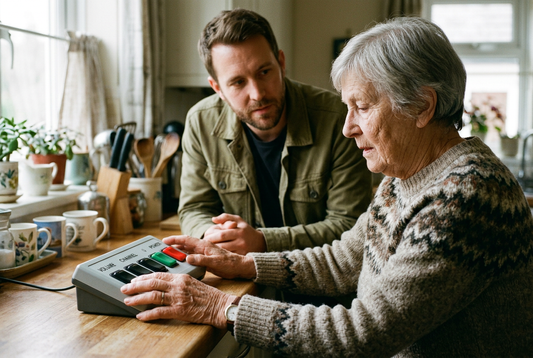
Easy-to-read displays, distinguishable buttons, and clear operating instructions can make everyday equipment more understandable. Evaluate the actual interface rather than assuming that a larger screen or an additional smart feature will improve usability.
How to assess needs before buying
Begin with a specific activity: getting out of a chair, preparing a drink, reaching an item, or using the bathroom. Identify what makes the activity difficult. Then check whether a change to the environment could help before adding equipment.
Record relevant measurements, available installation surfaces, storage conditions, and cleaning arrangements. Discuss preferences with the person who will use the product. Comfort, dignity, and willingness to use equipment matter alongside technical specifications.
What supplier information should buyers request?
Ask for the exact product model, intended use, instructions, dimensional information, applicable capacity limits, maintenance requirements, warranty terms, and access to replacement parts. Where a supplier makes a tested-performance claim, request the supporting document and check whether it identifies the model being offered.
For institutional purchases, include staff training and ongoing maintenance in the evaluation. A low purchase price may not represent good value if the product is difficult to clean, service, or replace.
How should certification claims be evaluated?
Start by asking what the claim refers to: a product, a management system, a laboratory, or a particular assessment scheme. These are different subjects and should not be treated as interchangeable evidence.
Request the scheme name, issuing organization, document identifier, scope, covered models, and a verification method. A test report should be read for the test conditions and conclusions it actually contains; do not interpret it as proof of every advertised benefit.
Requirements differ by product category and destination market. This buying guide does not establish that a product meets any specific legal or certification requirement. Confirm applicable requirements with the relevant authority or a qualified specialist before relying on a claim for procurement.
Questions to ask during a product demonstration
Can the intended user understand the instructions? Can they reach and operate the controls? Does the product fit the real environment? Can a caregiver clean or maintain it as directed? What happens if a component wears out? A demonstration should answer these practical questions without encouraging unsafe trials.
Frequently asked questions
Are age-friendly products only for people with disabilities?
No. Ease of use can benefit people with a wide range of abilities. However, an individual’s needs should guide selection, particularly when a product supports movement or bodily care.
Does a certification label guarantee suitability for every older adult?
No. Review the specific scope of the evidence and separately assess personal fit, installation, and intended use.
Should buyers choose the product with the most features?
Not necessarily. Prioritize features that solve a real problem and that the intended user can understand and use consistently.
Choose for the person, not just the label
Start with the task, assess the environment, review the documentation, and plan for maintenance. A well-matched product should have a clear purpose and understandable limitations. For equipment affecting mobility, transfers, or clinical care, involve an appropriately qualified professional in selection.
Tags:
Previous
Age-Friendly Product Buying Checklist: From User Needs to Certification Checks
Next
Aging in Place: Which Home Adaptations Should Come First?